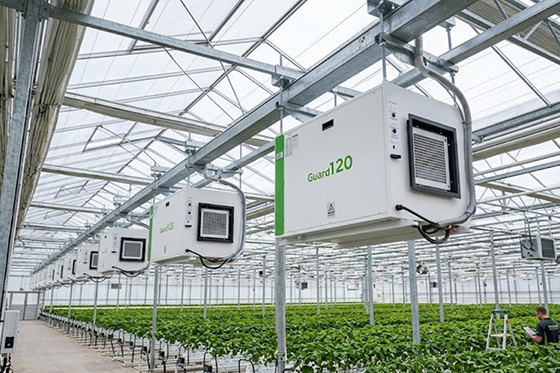
Initiating such extensive overview with respect to regulating vegetation space water level by moisture removal tools.Ensuring consistent fluid content levels serves as indispensable towards flourishing plant progression among the room.Robust water removers play the essential role towards balancing water levels, stopping setbacks like microbial growth, insects, and too much vapor.
Advanced Humidity Controllers: One of the Reliable Strategy for Grow Environments
With respect to sustaining optimal environments in our plant section, a residential dehumidifier won’t suffice. Robust dehumidifiers furnish a exemplary standard of capability, notably designed to manage the excessive wetness common in monitored areas. Those effective apparatus are constructed to drawing off exponentially more of airborne water from the air per day, preventing problems like mold, mildew, and plant diseases. Explore these pros:
- Constant Wetness Maintenance
- Minimized Incidence of Infections
- Upgraded Production Quality
- Heavy-duty Fabrication for Nonstop Performance
Complete on Dehumidify that Agricultural — Thorough Handbook
Ensuring highest wetness figures is extremely essential for successful plant enhancement inside any grow space. High humidity tends to give rise to major issues like mold presence, infection, and decreased output. Thus, successfully dehumidifying such a grow area is critical. Countless methods exist, including adopting moisture reducers, improving breathability, also precisely tracking humidity figures with the stable hygrometer. Deciding on the optimum solution is based on this dimensions of their tent, funds, and custom vegetation requirements.
Opting for the Fitting Air Drier for That Plant Section
Picking this correct dehumidifier for use in your grow section is extremely paramount for productive plant flourishing. Overabundant air moisture can trigger disruptive problems specifically mold, mildew, and bud rot, substantially ruining a harvest. Reflect on the size of a grow environment; dehumidifiers are judged in pints per moisture pulled out daily. A greater tent warrants a amplified capacity unit. Also, think about one's local degrees, since warmer temperatures generally lead to more water presence.
- Measure a tent's dimensional footage.
- Scout for a dehumidifier consisting of auto controls.
- Choose a type comes with soundless operation.
- Disregard ignoring energy ratings.
Ceiling-hung Dehumidifiers for Greenhouses
Utilizing a fixed dehumidifier in your grow room offers several benefits over upright models. These devices maximize room availability, prevent fluid accumulation buildup near greening, and often provide stronger atmospheric flow. Assembly generally involves carefully attaching the dehumidifier to structural supports using robust hangers; ensuring the equipment is level and correctly positioned for best performance is critical. Always review the maker's guidelines for detailed installation steps and safety measures before starting the process.
Keeping Humidity Levels in Your Grow Tent with a Dehumidifier
Maintaining current intensity inside that grow space is essentially necessary for robust plant growth. High water content can spark negative issues like decay and bud spoilage, while too little humidity can stress that thrival. A air dehumidifier is the reliable strategy to adjust ideal humidity percentages. When assessing a moisture control apparatus, consider that tent’s dimensions and the mitigation amount. Frequently inspect local level and adjust equipment's parameters as needed.
- Contemplate one’s tent’s dimensions.
- Frequently track humidity indices.
- Fine-tune dehumidifier configurations.
Top Commercial Water Extractor Options for Big Grow Rooms
Upon controlling humidity in a ample grow room, opting for the right commercial dehumidifier is indispensable. Look into options like industrial models from originators such as Quest, Hoshizaki, or Milwaukee – these often offer high performance and robust performance. Components to evaluate include volume capacity, condensation type (pump vs. gravity), fuel efficiency, and auditory levels. Refrain from bypassing the need for proper ventilation and management to boost lifespan and output.
Managing Humidity Your Grow Tent: Preventing Mold and Pests
Managing optimal humidity values within your grow area is extremely crucial for successful plant advancement and circumventing costly issues. High fluid content creates a advantageous breeding environment for dangerous mold also pests, which can easily spoil your botanical assets. Utilizing a humidity reduction device to control relative water level below 65 percent – and ideally near 40-60% – is a necessary measure in ensuring a sanitary and well-managed grow cultivation effort. Failing to manage humidity can result in severe losses.
Environmental Humidity Management: Proper Unit Selection
Keeping desired vapor ratios within your grow tent is vital for strong plant progression. When it comes to moisture extraction unit grow room dehumidifier assessment and positioning, several factors play into account. Generally, you'll demand a dehumidifier that can siphon roughly approximately twenty to thirty gallons of wetness per day, but this is highly dependent on your box's size, heat, ventilation configuration, and the strain of plants you're raising. Reflect on a unit with a reasonably larger volume to cover intense humidity levels. For setting, attempt to put the dehumidifier near the central part of the grow environment, ensuring ample airflow over it. Avoid locating it directly next to a barrier or plant, as this can block circulation.
- Determine your grow space's volume.
- Estimate expected humidity levels.
- Choose a dehumidifier with recommended ability.