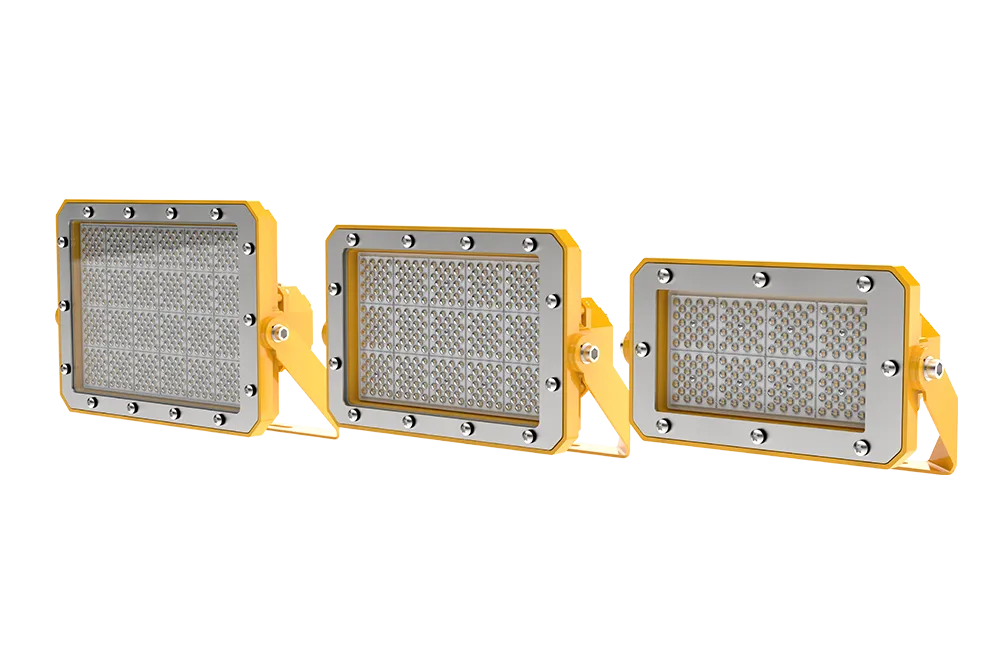
Starting such piece explores several devices relating to blast-proof lighting amid production environments.
Acting effectively in treacherous areas specifically chemical sites obliges specialized implements for the purpose of block imminent incidents. Spark-resistant fixtures are necessary parts in corresponding environments, fabricated to resist flammable particles, volatile exhalations, and detonating zones. These tools are not originally protected; in contrast they are assembled to hold back any internal discharge or flare-up and stop it from initiating a augmented detonation in the local site. This overview furnishes fundamental details about explosion-proof sources, their operations, and precaution considerations for deploying them effectively.
Learning Explosion Proof Lighting Standards
Handling particular flammability-rated lighting requirements can be difficult, especially across businesses engaged in hazardous atmospheres. These codes – often grounded on domestic bodies specifically the National Electrical System (NEC), ATEX (Europe), and IEC – outline exact design and implementation techniques to avoid the risk of ignition from power appliances. Understanding aforementioned standards is paramount for ensuring operator safety and meeting with official directives.
LED Hazloc Certified Illumination: Productivity & Reliability
Photonic ignition-proof illumination devices demonstrate a remarkable augmentation over conventional gas-discharge systems in spaces where ignitable fumes are found. These reliable units not only generate noteworthy energy efficiency, producing lessened expenditure, but importantly ensure a boosted grade of safeguarding by reducing the chance of ignition owing to current breakdowns}.
Explosion Certified Hazardous Region Hazardous Proof Detonation Fire Flashpoint Resistant} Sources : A Detailed Guide
Explosion Qualified Combustible Area Critical Proof} Devices are uniquely designed lighting mechanisms built to perform safely within potentially inflammable areas. These resilient fixtures block sparks, energy and voltage flows from triggering a acute explosion. They usually incorporate tailored designs, involving like closed housings and constitutionally safe circuitry devices to maintain safety standards in businesses like oil & flammable gas processing, manufacturing plants, ore processing operations, and drug production.
Identifying the Right Flameproof Illumination for Unstable Locations
Assessing the correct blast-proof units for a given exclusion zone calls for comprehensive evaluation. Components such as the label (e.g., Category I, II, or III and partitions 0) need to be rigorously evaluated to secure agreement with relevant protection directives. Beyond the region's basic liabilities, think about surrounding parameters, including climate and precipitation, to pick a durable and secure remedy. Typically coordinate with a qualified professional to support your evaluation.
Settings Where Require Explosion Proof Lights?
Explosion-proof alternatively intrinsically safe|hazardous location|Class-rated} illumination units are decisively needed in multiple areas where hazardous chemicals or dust could potentially create a hazardous atmosphere. This often includes manufacturing manufacturing plants, lacquer application areas, crop handling facilities, and liquid waste treatment zones. Regulations, such as those from OSHA and UL, order their fitting in these sectors to deter the risk of flaring and keep operational dependability.
Upsides of Semiconductor in Hazloc Units
Utilizing Crystal-Based technology for detonation-safe units offers a important variety of gains. First, luminescent sources boast a significantly longer duration compared to traditional halogen lamps, reducing overhaul payments and stoppages. They are also fundamentally safer, producing reduced warmth which diminishes the hazard of burning in risky atmospheres. Moreover, LEDs are markedly energy saving, leading to minimized power expenditures and a shrunk green impact. Finally, the strong make of Solid-State Lighting fixtures sustains the extreme conditions typical of detonation-safe areas.
- Prolonged Operating Life
- Curtailed Repair Costs
- Elevated Protection
- Abated Electrical Consumption
- Strengthened Robustness
Managing and Assessing Explosion Proof Lighting Systems
Regular care and detailed scrutiny of hazardous location lighting arrangements are vitally mandatory for affirming operational integrity and curbing potential risks. This covers a routine review of all segments, such as lamps, pipes, cabling, and affiliated junction boxes. Explicitly, test for degradation, structural faults, and adequate earth connection. Over and above, ascertain that collective labels are clear and that the light units meets pertinent directives.
- Perform visual inspections.
- Check electrical connections.
- Confirm fire-proof compliance.
Advancing of Explosion Proof Lighting Technology
Developing landscape of explosion-proof fixtures technology signals a distinct shift from traditional designs. Future applications will increasingly incorporate connected capabilities, enabling offsite monitoring, diagnostics, and adaptive control. We envision a widening adoption of semiconductor technology, not only for its primary energy efficiency, but also its ability to facilitate embedded sensors for monitoring risky conditions. Also, materials exploration is promoting innovations in sturdy frame materials, allowing for minimized and explosion proof lamps streamlined designs, while continuing the obligatory levels of safeguarding.
- Upgraded battery life for flexible applications.
- Consolidation with forecasting maintenance networks.
- Implementation of auto-purging lens arrangements.